


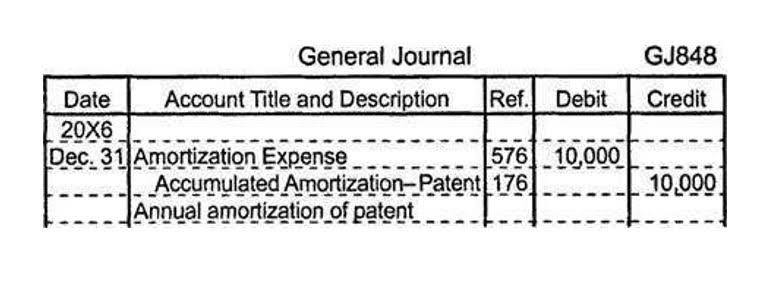
The impact of any error can compound QuickBooks if it’s not identified quickly. Entry reversal throws off the accuracy of your books and financial statements. When it comes time to balance the books, your assets include an additional amount that doesn’t exist and your liabilities are short an expense. The errors of the original entry are one of the accounting errors where the double-entry has been correctly recorded but at the wrong amount. For example, a utility bill of $1,500 has been debited to the utility expense account as $1,700.
Errors in Original Entry
This type of error commonly happens in accounting and data entry processes and can be especially tricky to spot given that the number may still seem plausible on a cursory glance. Errors can either be small mistakes that don’t affect the overall figures or ones that snowball into greater miscalculations and need more time and resources to identify and repair. Accounting mistakes can keep your small business from running smoothly and hurt growth so it’s important to learn the common types of accounting errors and how to correct them. Transcription and transposition errors may also occur in syntax when computer programming or programming, within variable declarations or coding parameters. This should be checked by proofreading; some syntax errors may also be picked up by the program the author is using to write the code. Unfortunately, this situation is likely to get worse before it gets better, as workload for users and workers using manual direct data entry (DDE) devices increases.

Understanding Capital And Financial Accounts In The Balance Of Payments
Transposition errors are the result of reversing two digits that were entered back-to-back. Serious financial consequences can result from a transposition error, such as paying an employee $8,268 instead of $2,868. For instance, cash sales of $2,500 have been recorded on the debit side and credited to bank account. This is another accounting error where the transaction has been recorded at the correct amount; however, that transaction has been recorded on the wrong side. Error in accounting or accounting error is the omission or misstatement in the financial statements. Material errors are the omission or misstatements that could lead or influence the decision making of the users of financial statements either individually or collectively.
What is the error called when two letters are mistakenly swapped?
If the amount from item A is accidentally recorded in the line for item B, or vice versa, this error could be considered a transposition. A transposition error can occur in any industry where data received in one form must be re-entered into another. This can include a https://www.bookstime.com/ phone number, address, or ZIP code to be entered into a customer’s profile, as well as amounts to be recorded for items ordered or even in medication dosing information.
If a Trial Balance gives an incorrect picture, it means that errors exist somewhere in the system. An error of commission will lead to understating or overestimating of the total. The entries recorded in the journal and its posting in the ledger should be examined for such errors . It must be noted here that there might be transactions that are not recorded or posted at all.

Ask a Financial Professional Any Question
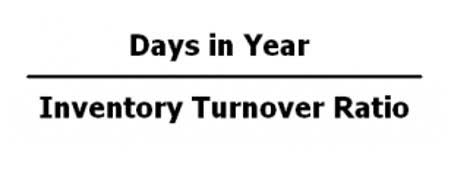
Adding a journal entry may be enough to correct an accounting error. This type of journal entry is called a “correcting entry.” Correcting entries adjust an accounting period’s retained earnings i.e. your profit minus expenses. Correcting entries are part of the accrual accounting system, which uses double-entry bookkeeping. This means the correcting entry will have both a debit and a credit.
For example, if $3,560 is written down as $35.60, this is an instance of a sliding error. While this example illustrates a simple, everyday scenario, it underscores the importance of accuracy and thoroughness in financial record-keeping. The divisibility by 9 trick is one of many tools professionals use to ensure their records are accurate.
- For example, if goods purchased from B of $2,000 are recorded on the credit of B’s account as $200, the credit side of the trial balance will be $1,800 short.
- This can include a phone number, address, or ZIP code to be entered into a customer’s profile, as well as amounts to be recorded for items ordered or even in medication dosing information.
- If syncing with apps has stopped, accounts don’t balance, or entries are miscategorized, it’s possible there’s been a misuse of accounting software.
- Typically, we can detect such errors by taking the difference between debits and credits and divide it by 9.
- This means the correcting entry will have both a debit and a credit.
- An example of a principle error is buying a piece of equipment and miscategorizing the expense as a sale instead of a purchase.
How to catch transposition errors?
- When the value of assets is being recorded and a transposition error occurs, this can cause inaccuracies to be reported to various agencies, such as the Internal Revenue Service (IRS) or shareholders.
- In my fatigued stupor, I open the accounting software and start charging through the bills.
- I get through them as fast as possible because my coworker said there are powdered doughnuts in the kitchen.
- A transposition error describes an event where a bookkeeper accidentally reverses two adjacent digits, when recording transactional data.
It is important to transposition error recognize that some errors are not highlighted by a trial balance. Fifth, check if an amount shows a balance that is equal to the difference in the trial balance. The errors in a trial balance can be located by taking the following steps.
- Transposition errors also describe scenarios where bookkeepers enter spreadsheet data into the wrong cells.
- You might make a transposition error when writing a two-digit number or a string of numbers (e.g., 1835 vs. 1853).
- Being the diligent business owner you are, you check my work before paying bills.
- Trial balance errors cause inaccuracies on your balance sheet and income statement.
- A closing error occurs when entries are added or changed after you’ve closed the books.
In fact, a survey by QuickBooks showed that 1 in 6 small business employees said a single inaccurate paycheck would make them quit their job. The potential impact of a data entry error can vary from something minor to a major mishap, such as underpayment or overpayment of a vendor. For example, if goods sold to John amounting to $2,000 are not recorded in the journal, this will not make the trial balance disagree. For example, if goods purchased from B of $2,000 are recorded on the credit of B’s account as $200, the credit side of the trial balance will be $1,800 short. To spot the errors, find the difference between the recorded amount and the correct amount. Businesses that use the cash accounting method could eliminate virtually all manual transactions by having their software automatically import bank transactions.



No comments yet.